Fishing Girl and Puppy: A Designer’s Review
As a designer who has spent countless hours digitizing patterns and testing them on various fabrics, I have learned that the charm of a design lies not just in its preview image, but in how it translates to thread. When I first opened the files for Fishing Girl and Puppy, I was looking for more than just a cute graphic. I was evaluating whether this asset could hold its own in a professional embroidery project. For those of us running small shops or creating personalized gifts, the difference between a design that looks good on a screen and one that stitches out cleanly is the difference between a return request and a repeat customer.
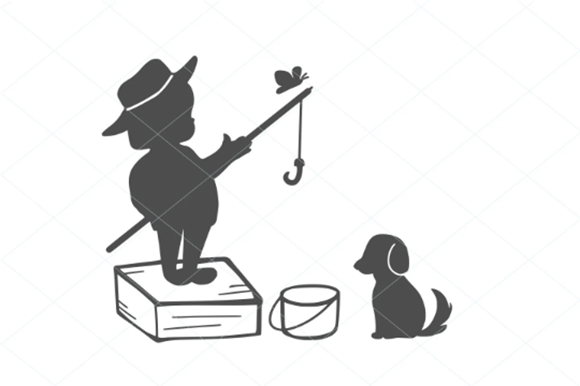
The initial impression of Fishing Girl and Puppy is one of quiet nostalgia. It captures a serene moment, likely appealing to customers who value simplicity and heartfelt themes. The layout suggests a balance between negative space and detailed stitching, which is crucial for maintaining clarity on textured fabrics. In the world of Crafts and digital Graphics, many designs suffer from being too busy or too vague. This design, however, seems to strike a middle ground that invites closer inspection without overwhelming the viewer.
Visual Appeal and Stitching Clarity
When considering a machine embroidery design for real-world use, I always look at the flow of the shapes. The silhouette of the girl and the puppy needs to read clearly from a distance, especially if this is intended for a tote bag design or a sweatshirt embroidery piece where the viewer might be several feet away. The interplay between the figures suggests a narrative that resonates with family-oriented buyers.
From a technical standpoint, the transition between different elements is key. If the design relies heavily on fill stitch areas, we must consider the stitch density. High density can cause puckering on lightweight materials, while low density might leave gaps on plush fabrics like towels. A well-balanced design like Fishing Girl and Puppy should ideally use a mix of satins stitch for borders and definition, and lighter fills for larger areas. This ensures that the embroidery file performs well across different fabric textures, from sturdy denim to soft cotton blends.
Real-World Application: The Custom Tote Scenario
To truly test the viability of this design, I imagined a specific client request: a custom handmade product line for a local boutique specializing in outdoor-themed nursery decor. The client wanted a series of canvas tote bags featuring whimsical nature scenes. Fishing Girl and Puppy fit this brief perfectly. The theme aligns with the "quiet adventure" aesthetic that is currently trending in baby embroidery and children’s apparel.
In this scenario, the design would be placed centrally on a natural-colored canvas tote. The contrast between the thread colors and the fabric is critical here. I would recommend using earthy tones—olive greens, soft blues, and warm browns—to enhance the rustic feel. Because canvas has a visible weave, the design must have enough structural integrity to not get lost in the texture. If the details of the fishing rod or the puppy’s ears are too fine, they might disappear. This is why reviewing the digital embroidery file at 100% zoom is essential before hitting the stitch button.
Versatility Across Products
Beyond tote bags, this design shows promise for a variety of custom apparel and home goods. For a personalized gift, imagine this stitched onto a high-quality kitchen towel. The horizontal orientation of many fishing scenes works well for the border of a towel, though placement must be careful to avoid the hem. Alternatively, as an embroidered patch, this design could be scaled down and applied to denim jackets or backpacks, adding a unique touch to everyday items.
For Etsy sellers and craft business owners, versatility is money. A design that works on a cap as well as it does on a pillow cover increases its value. However, curved surfaces like caps present challenges. The design must not be too wide, or it will distort around the curve. If Fishing Girl and Puppy has a compact footprint, it becomes a strong candidate for headwear, provided the hoop size is appropriate for the machine being used.
Technical Considerations and Fabric Choices
No design is universal, and Fishing Girl and Puppy requires thoughtful execution depending on the material. On stretchy fabrics like jersey knits for t-shirts, a proper stabilizer is non-negotiable. Without it, even the best-digitized design can pucker and distort, ruining the finished product. I always advise testing on scrap fabric first. This allows you to check thread tension and ensure that the thread colors provide sufficient contrast against the background.
Dark fabrics pose another challenge. If the design includes light-colored elements, they may need underlay stitching to pop against the dark background. Conversely, on white or light fabrics, shadowing from dense stitches can become visible. A smart designer will run a test on both black and white fabric to see how the design holds up. This step is often skipped by hobbyists but is standard practice for professional commercial embroidery operations.
It is also important to note the file formats provided. The description mentions vector cut files in .svg and .eps. These are excellent for die-cutting machines and scalable graphics, which is useful if you are creating hybrid products that combine embroidery with vinyl cuts or paper crafts. However, for direct machine embroidery, you will need to ensure you have the correct embroidery-specific formats (such as .pes, .dst, or .jef) compatible with your machine. Always confirm the specific embroidery file types included in the zip folder before purchasing, as vector files alone cannot be sent directly to an embroidery machine without digitizing software.
Enhancing Brand Consistency and Value
Using a cohesive design like Fishing Girl and Puppy can strengthen brand identity for small shop owners. If your brand focuses on wholesome, family-friendly, or outdoor-inspired items, this design reinforces that message. Consistency builds trust. When customers see a high-quality printable mockup or a well-stitched sample, they perceive higher value. This perception allows for better pricing power and increased buyer engagement.
For holiday embroidery projects, such as Father’s Day or summer-themed gifts, this design is particularly relevant. It evokes memories of leisure time and bonding, which are powerful emotional drivers in sales. By positioning this design as part of a curated collection, you create a more compelling shopping experience than selling single, disconnected items.
Final Designer Notes
Before committing to a large production run, keep these practical tips in mind:
- Check Licensing: Always verify the license terms for commercial use. Ensure you are allowed to sell finished items made with this design.
- Test Stitch Density: Run a test stitch-out to check for thread breaks or excessive puckering.
- Contrast is Key: Choose thread colors that stand out against your chosen fabric.
- Stabilize Properly: Use the right stabilizer for your fabric type to maintain shape and clarity.
- Inspect Details: Zoom in on the design to ensure small elements like eyes or fins are not too delicate for the intended size.
In conclusion, Fishing Girl and Puppy offers a charming aesthetic that, when handled with technical care, can elevate a range of design assets for your embroidery project portfolio. It is not just a graphic; it is a tool for storytelling through thread. By understanding its strengths and limitations, you can create small shop products that resonate with customers and stand the test of time.